Infrastructures of Extremism
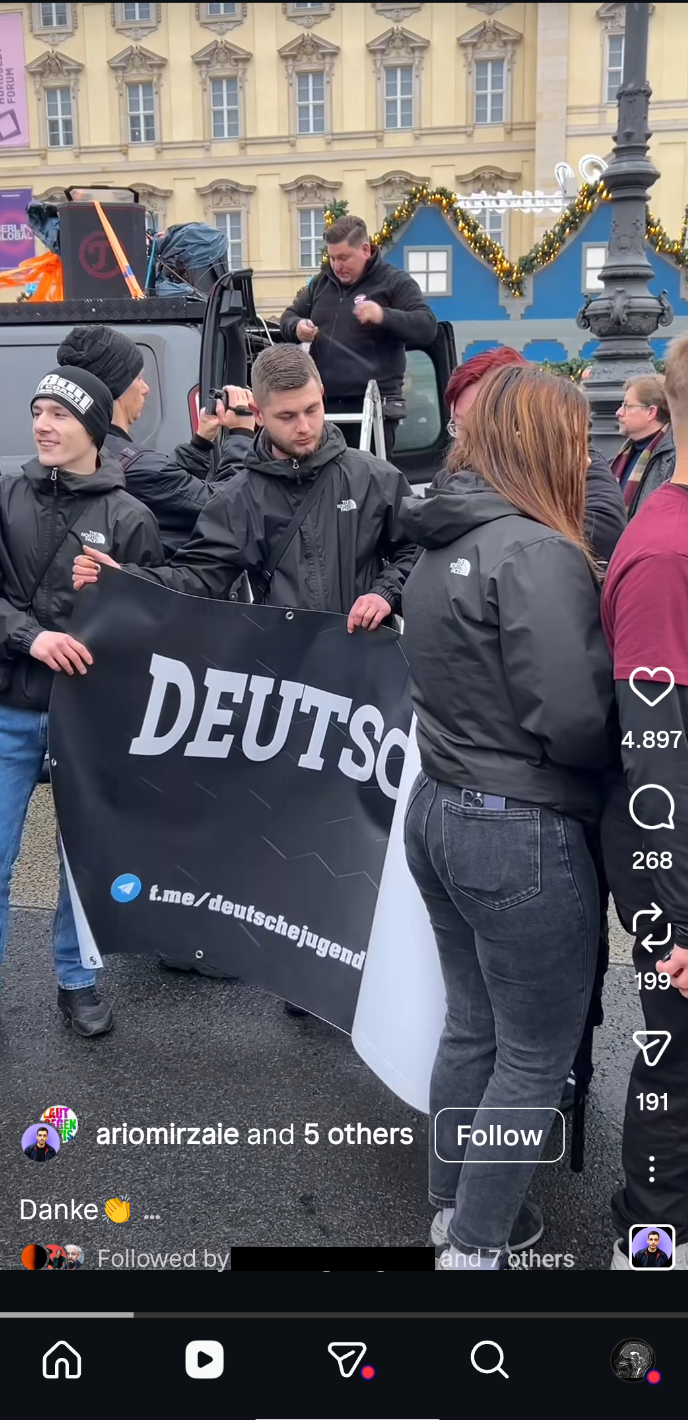
Right-wing extremist organisations have gained visibility on European streets. During orchestrated demonstrations, in particular youth groups show banners that advertise Telegram channels as offline-to-online gateways into far right communities. This investigation takes these banners as its starting point to surface how they lead into a network of interconnected online communities as Infrastructures of Extremism.
At a rally held in Berlin on 29 November 2025 against so-called "criminal foreigners", participants promoted Telegram channels used for youth recruitment and for coordinating activities at the local level. Such events reveal how street-level mobilisation is tightly interwoven with a broader digital ecosystem that fuels the expansion of far right extremism.
These Telegram channels collectively form a digital infrastructure that sustains ultra-nationalist ideologies, enabling the circulation of fascist worldviews among younger supporters. Across Germany, numerous members of these networks maintain ties to far-right parties such as Die Heimat and Alternative für Deutschland (AFD), whose presence in parliamentary politics gives symbolic legitimacy within these online spaces.
The former youth organisation of AFD, Junge Alternative, was banned after being classified as right-wing extremist and subsequently ousted from the public sphere. Yet, recently a successor movement called Generation Deutschland emerged, taking on the role of mobilising younger supporters through the same networks. While the organisation was newly formed, some local groups that once operated under the banner of Junge Alternative have simply renamed their Telegram channels to Generation Deutschland and continued their activities business as usual. Hence, it occurs that the platform provided these groups with the means to absorb the ban rather than enforcing its implementation.
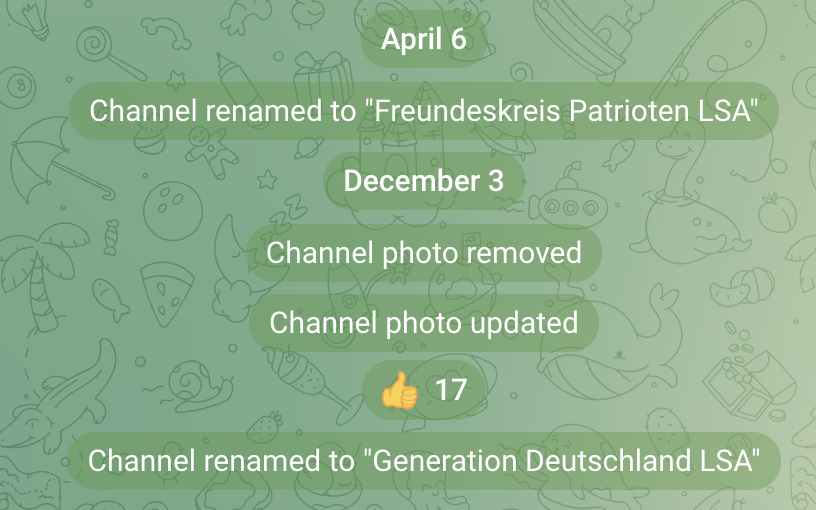
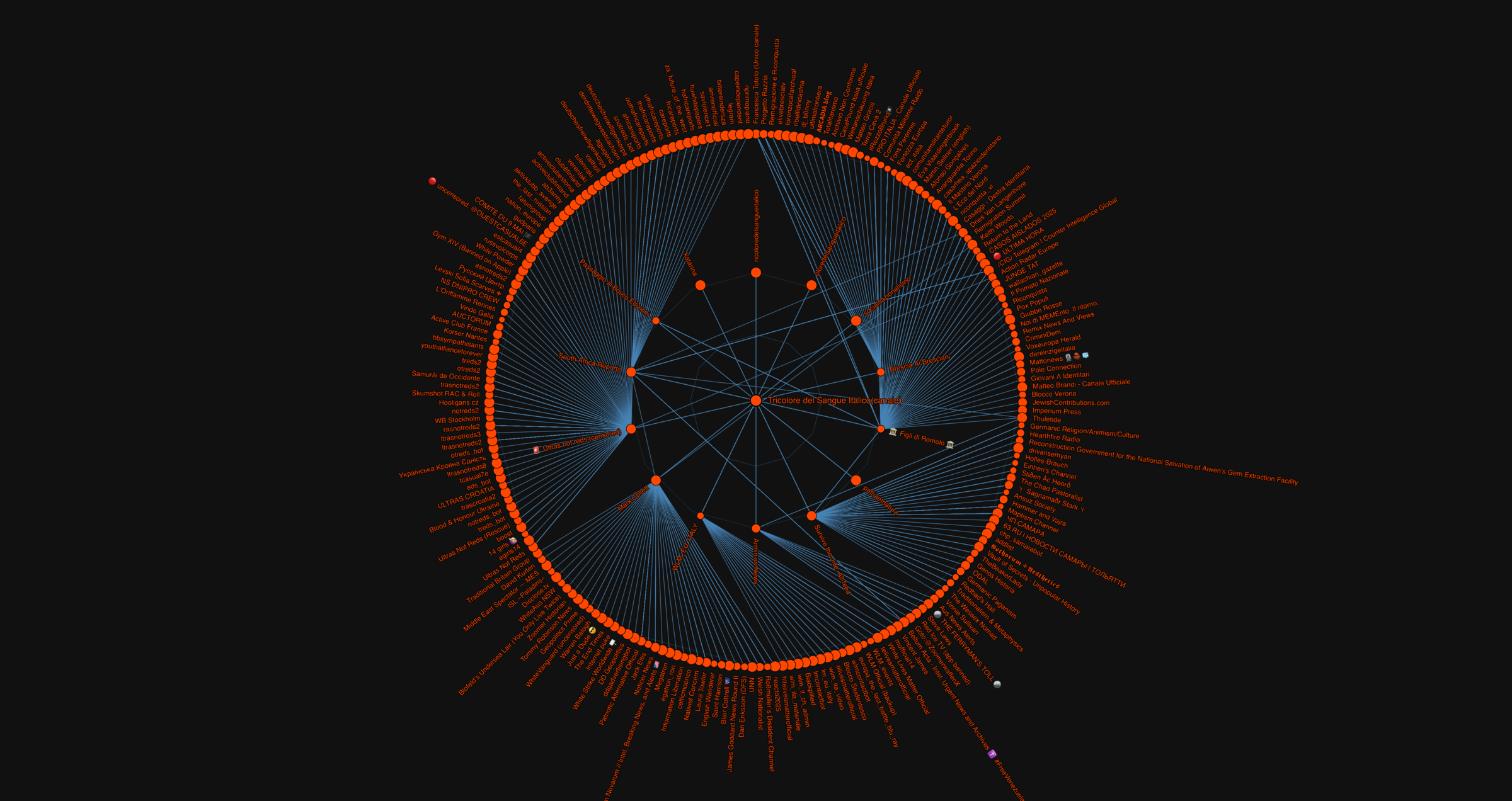
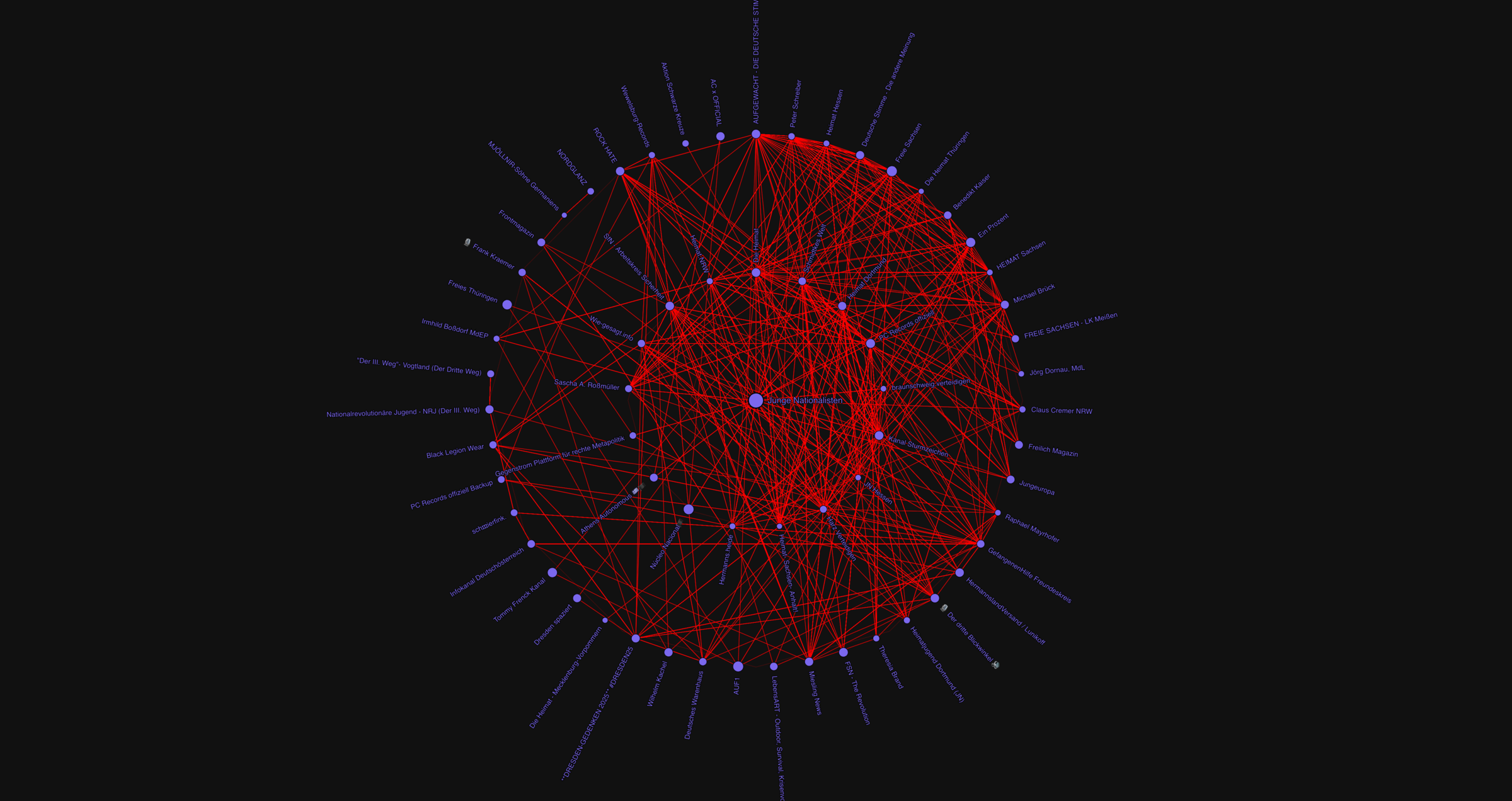
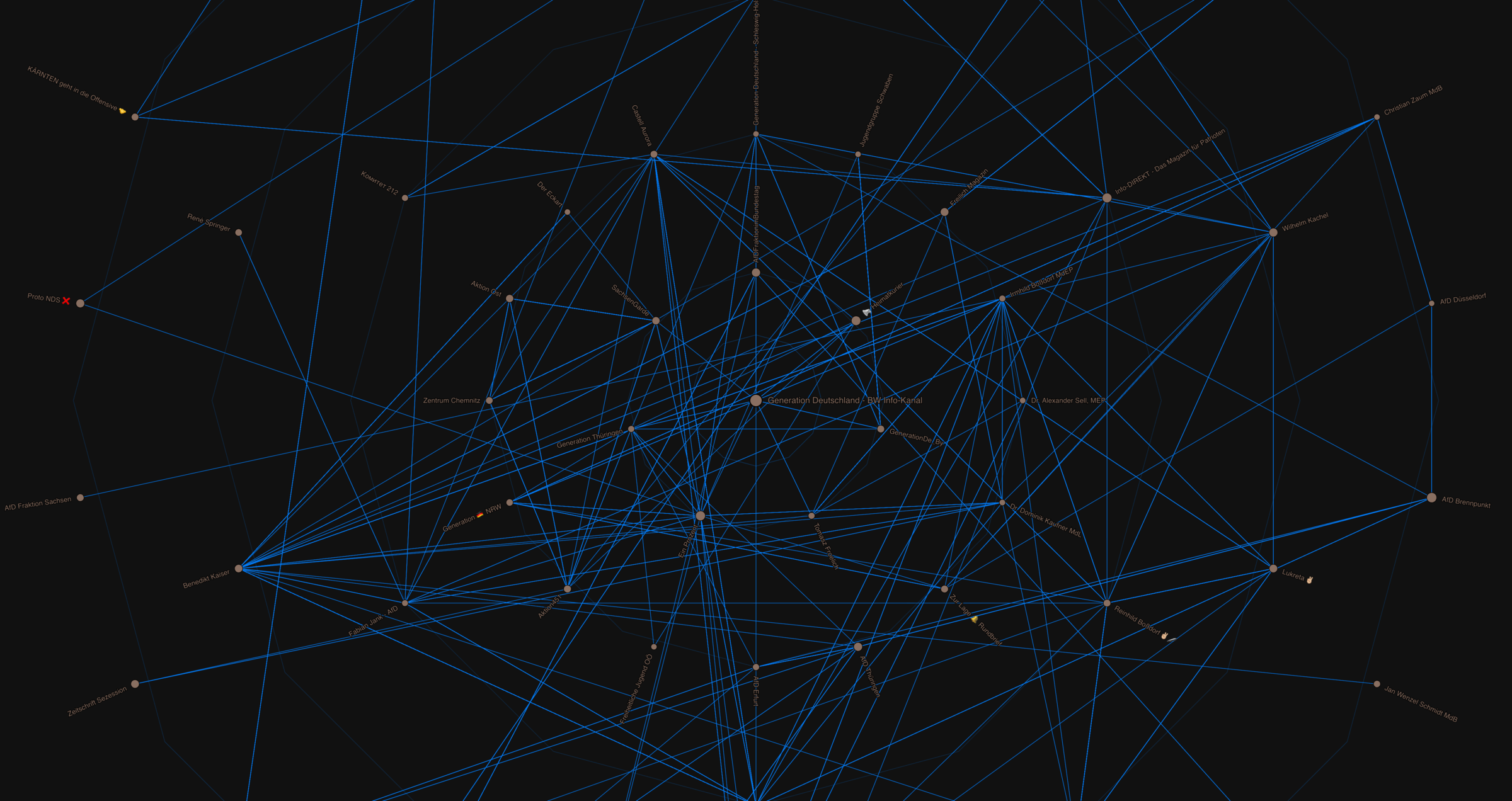
These organisations operate within a strategically interconnected system. Groups like Generation Deutschland, which present themselves with a more moderate façade, regularly redirect their subscribers toward more radical channels. These, in turn, refer onward to others, forming a continuous chain of racist and ultra-nationalist messages. Their networks extend far beyond Germany, reaching similar nationalist scenes in countries such as Italy, France, Austria, the Netherlands and Ukraine, and beyond.
Telegram plays a central role in maintaining this ecosystem. Its platform design creates not simply a place for supporters of specific groups to gather, but a tool to enable a constant stream of communication. Forwarded posts act as ideological pathways, allowing audiences to be funneled from one channel to another, enabling persistent networks, even in the face of bans or restrictions.
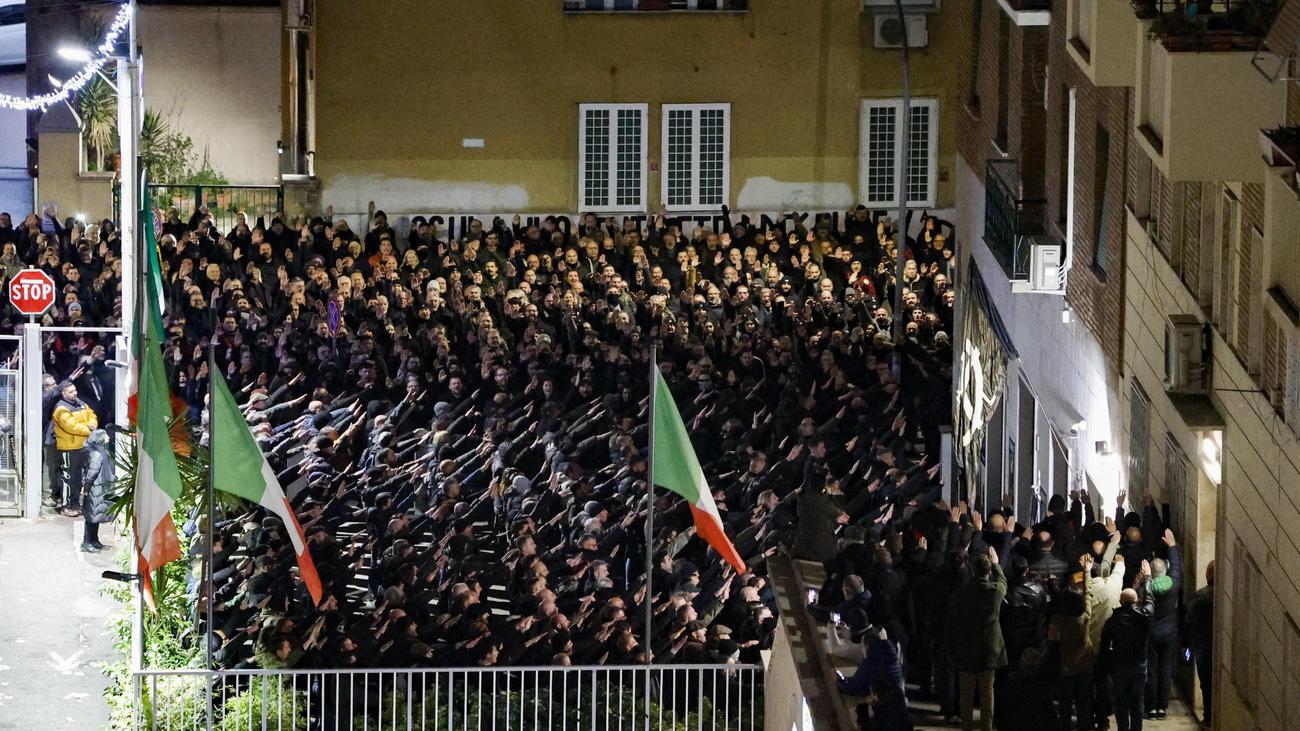
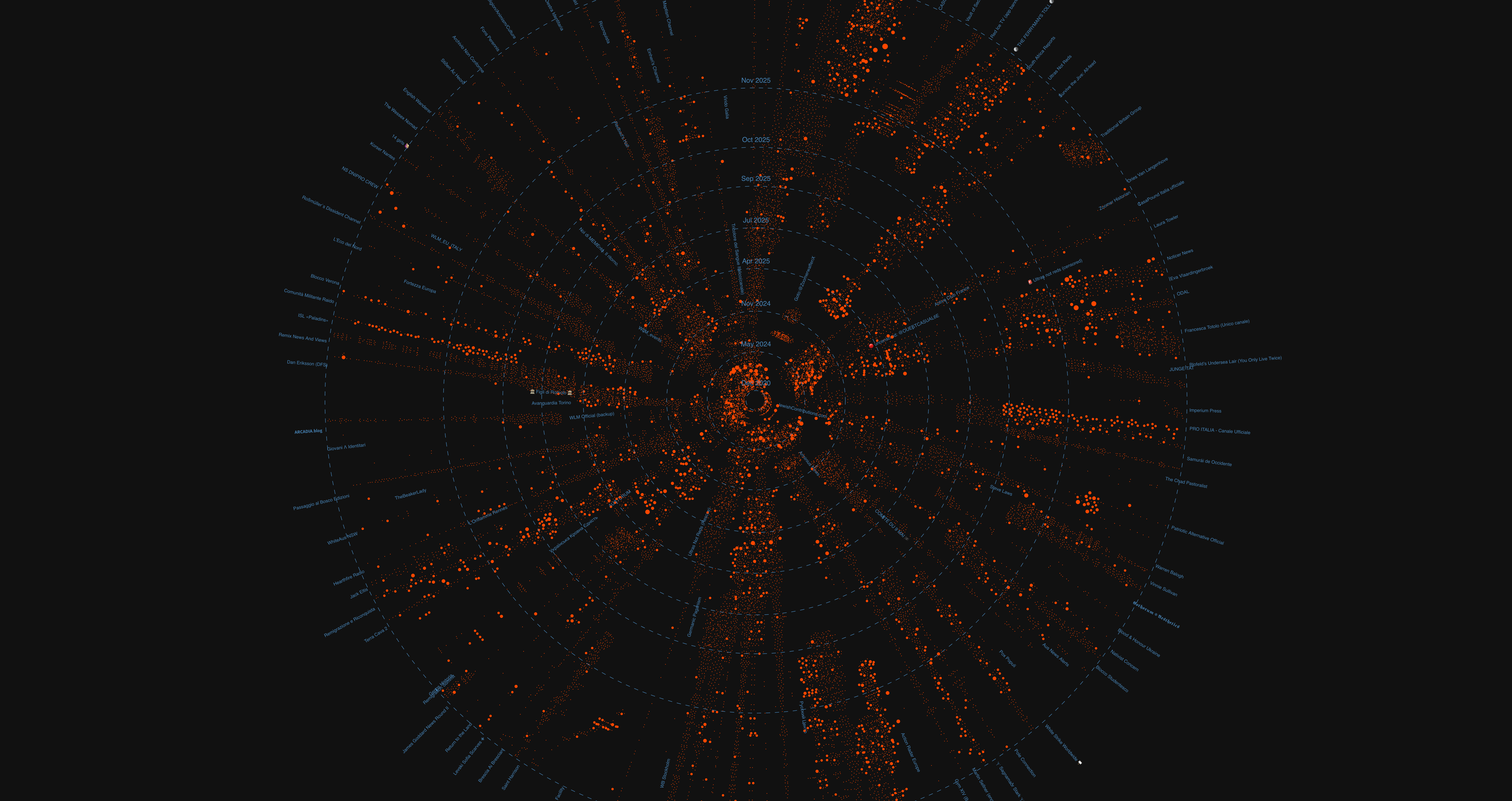
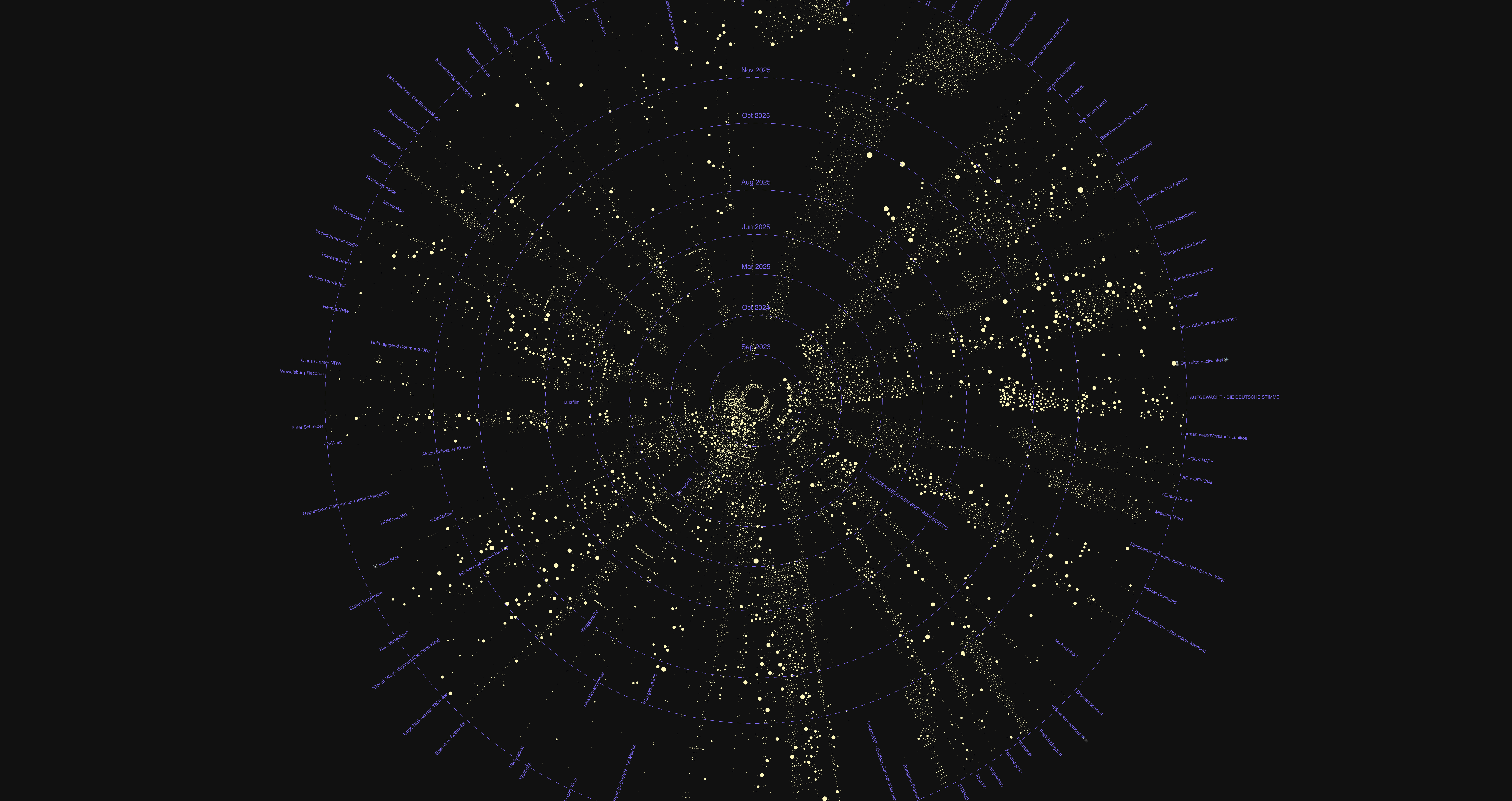
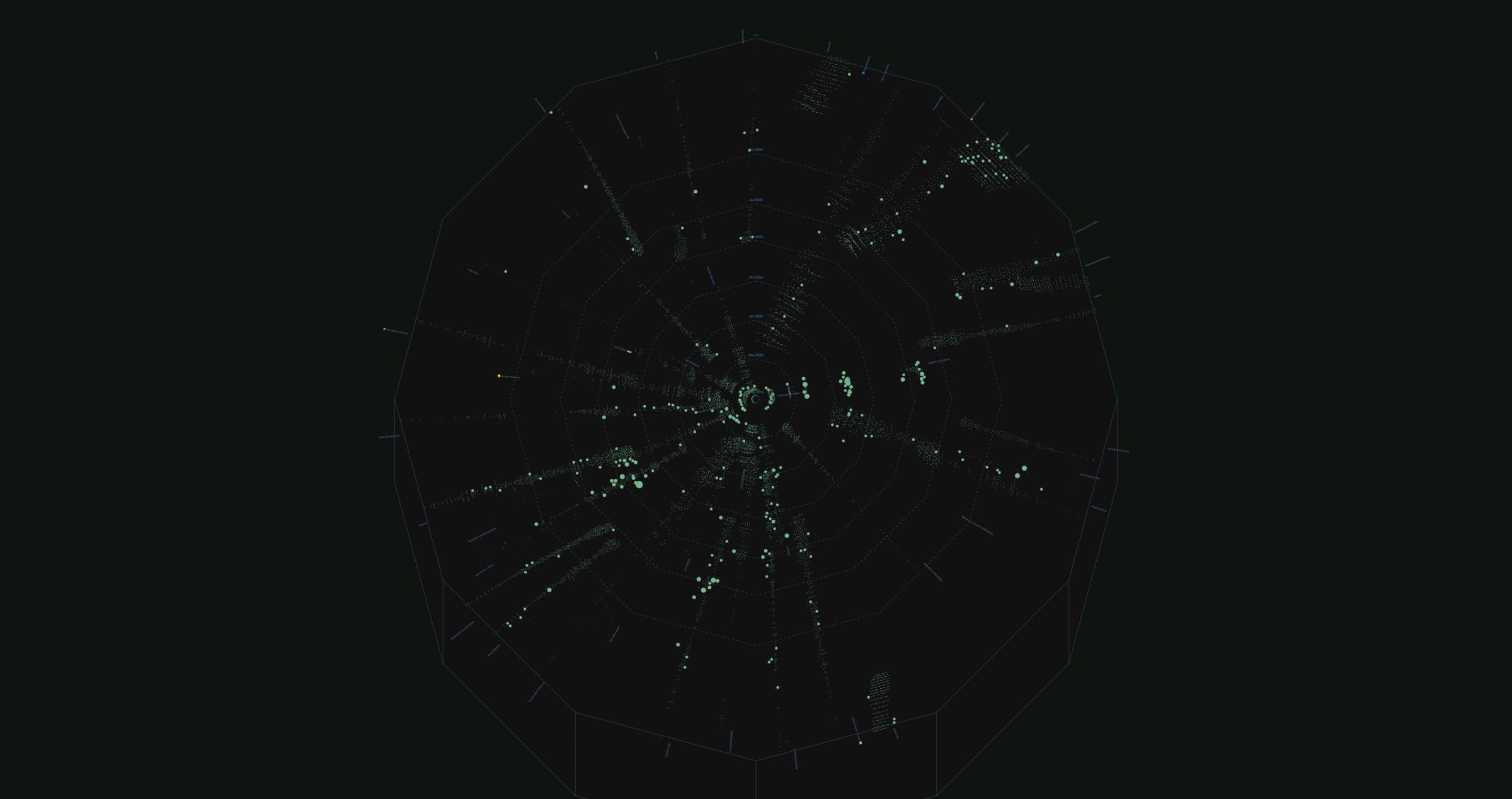
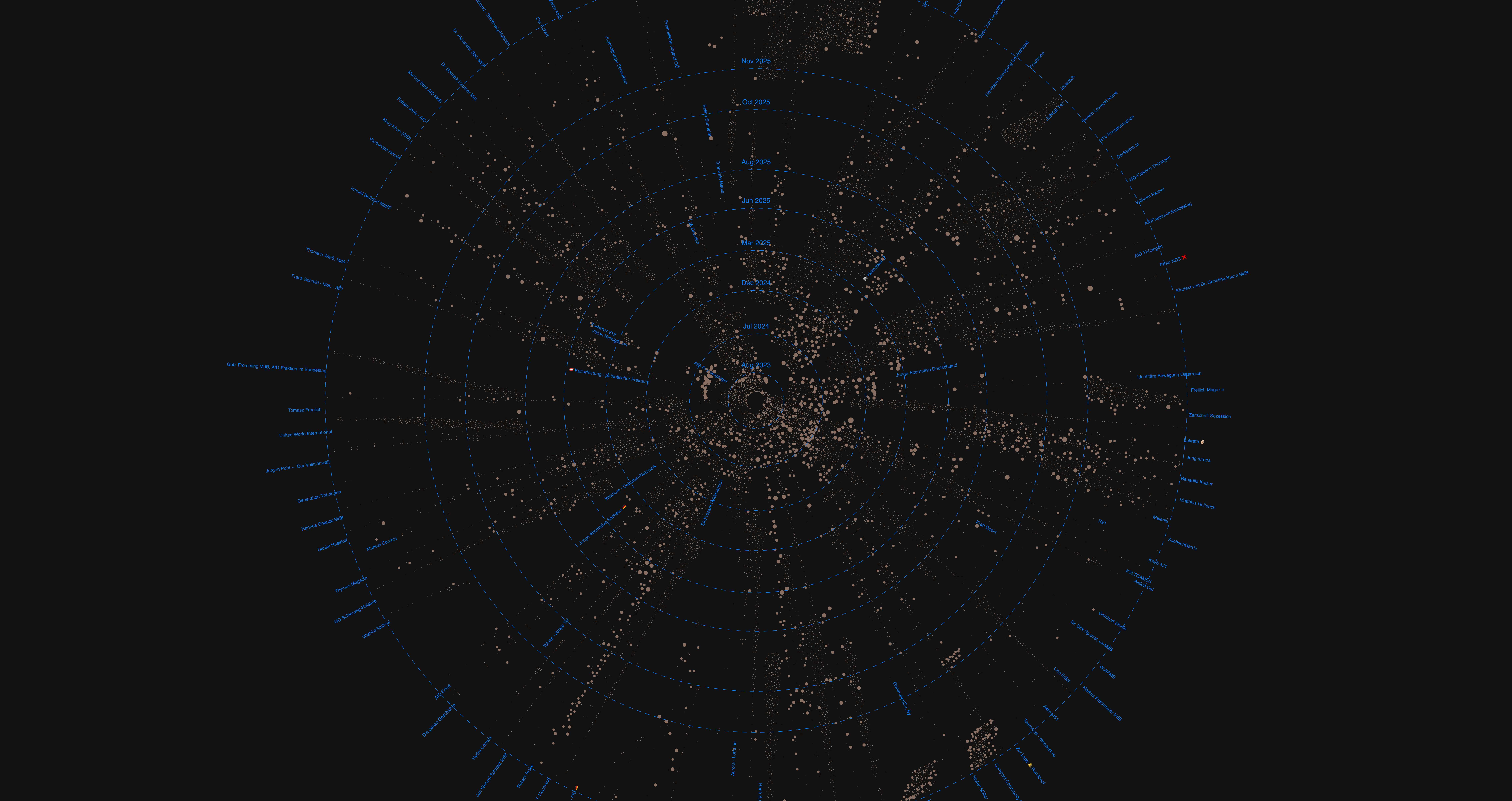
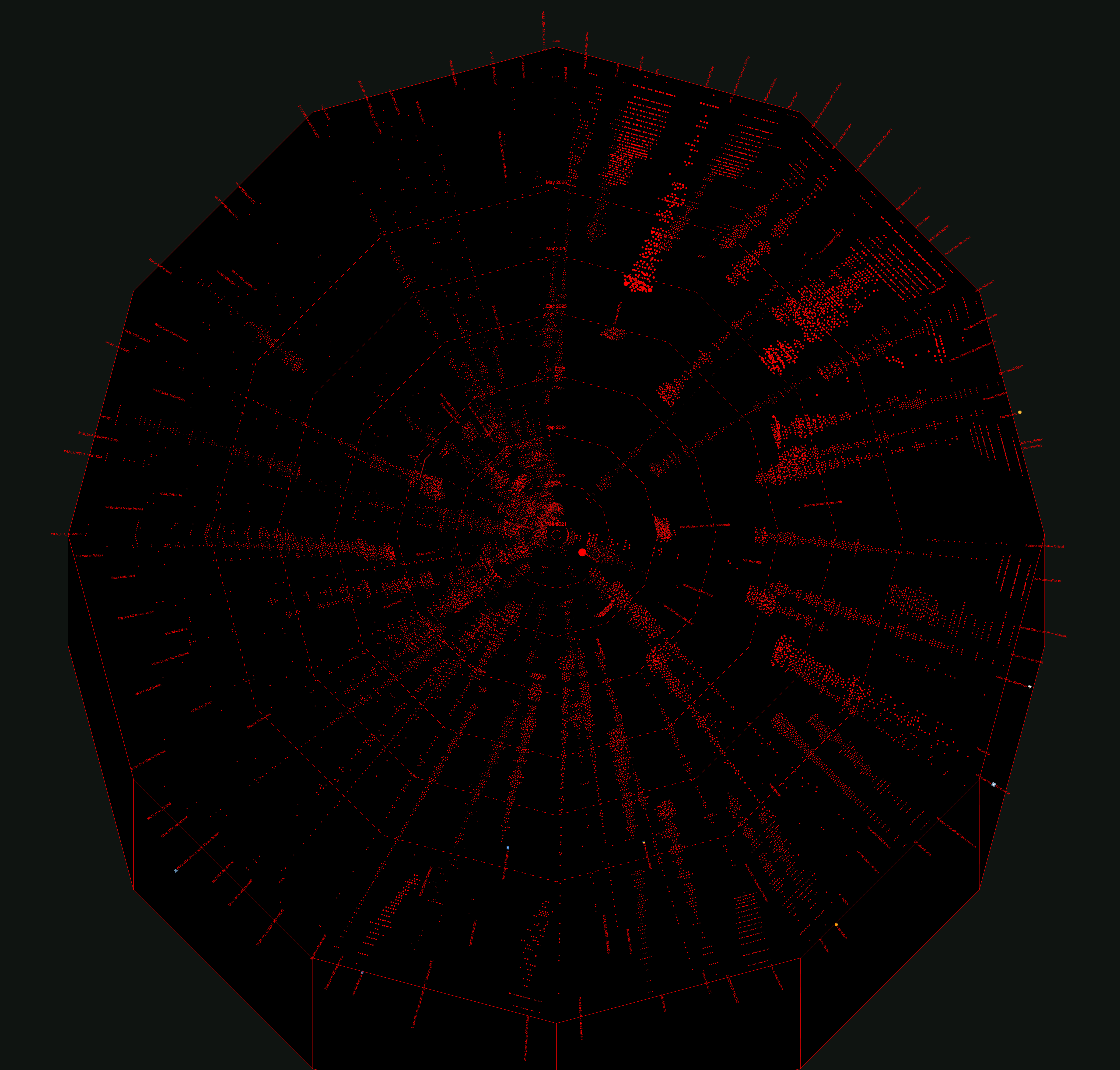
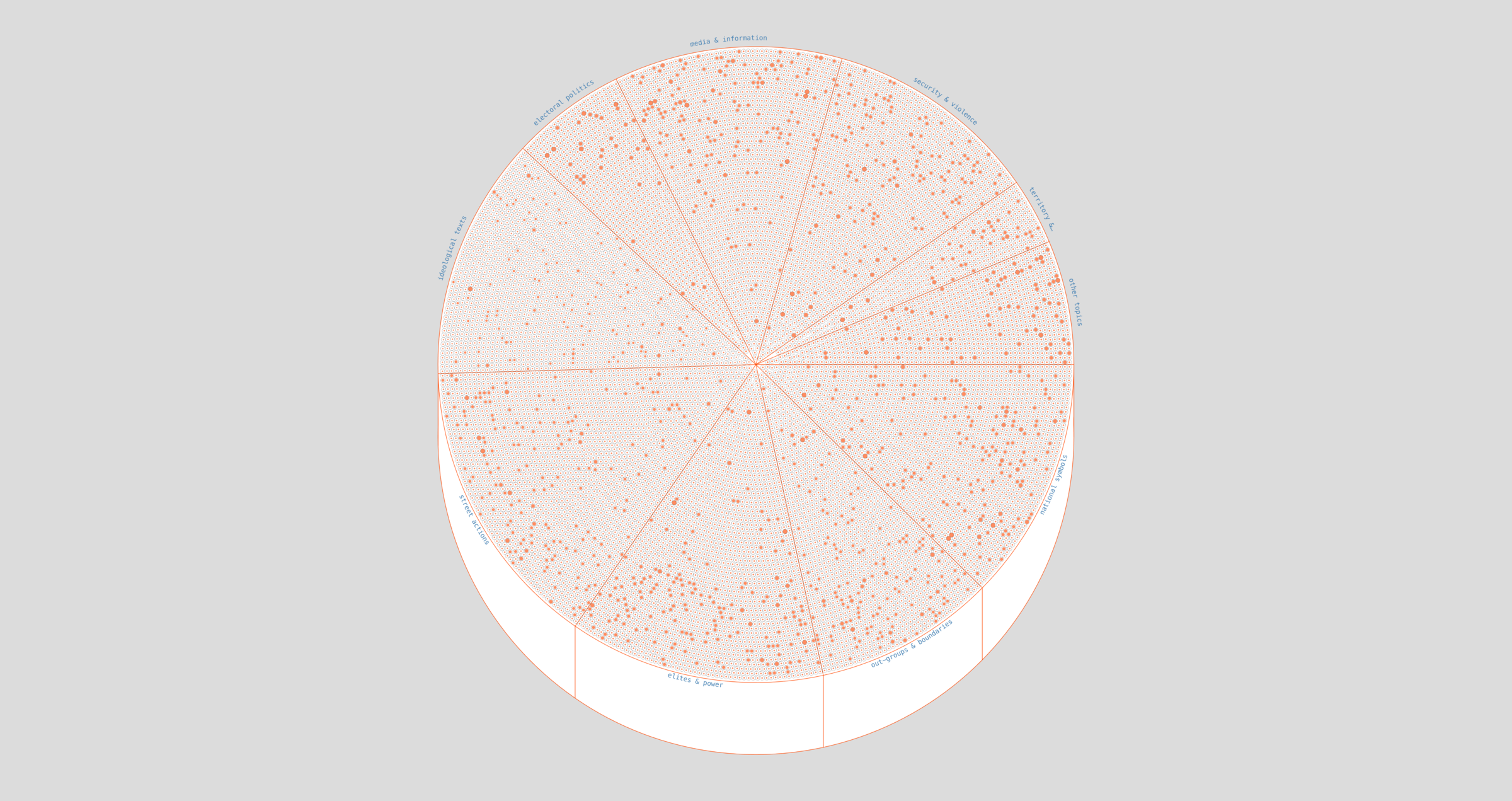
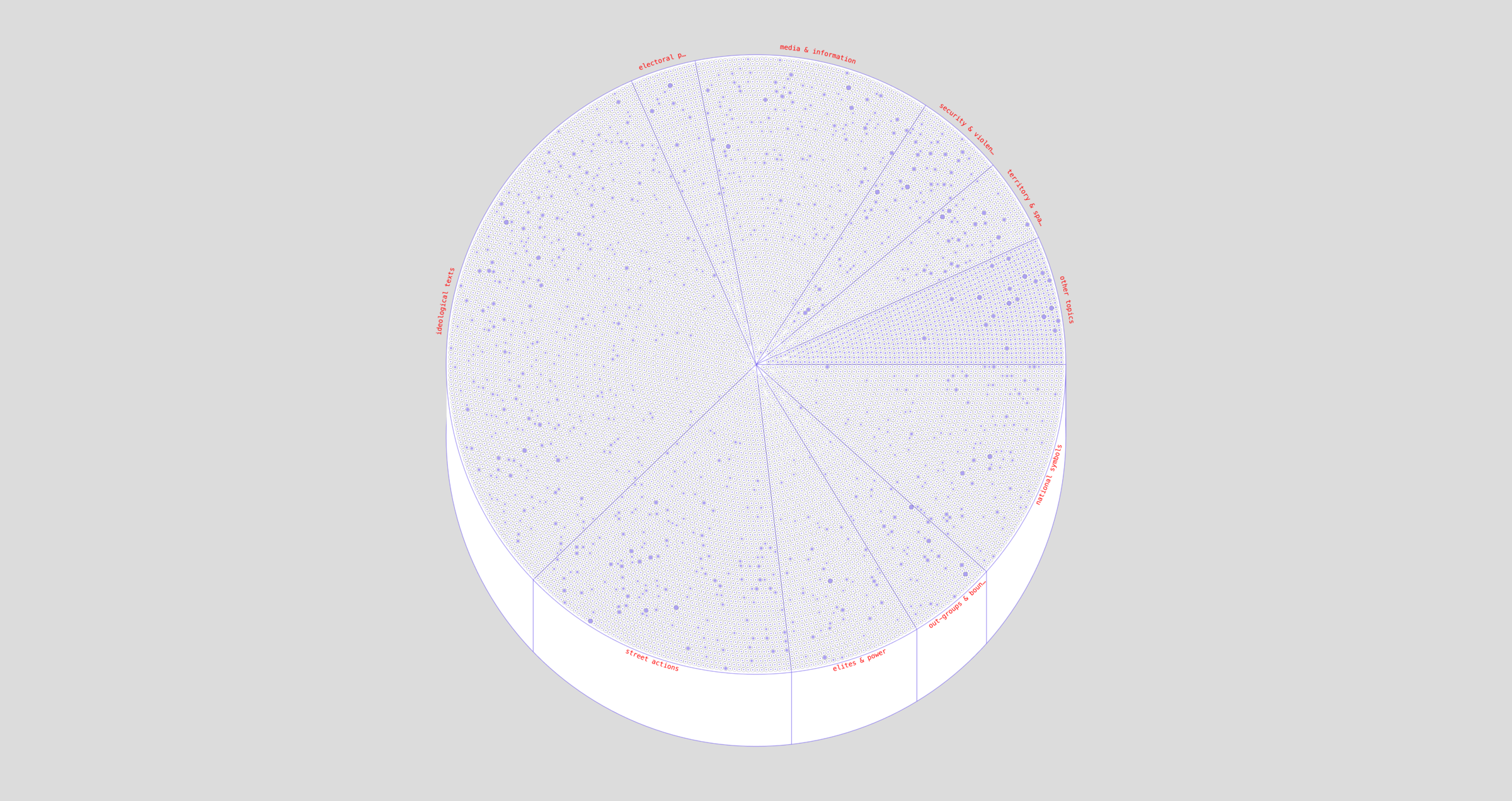
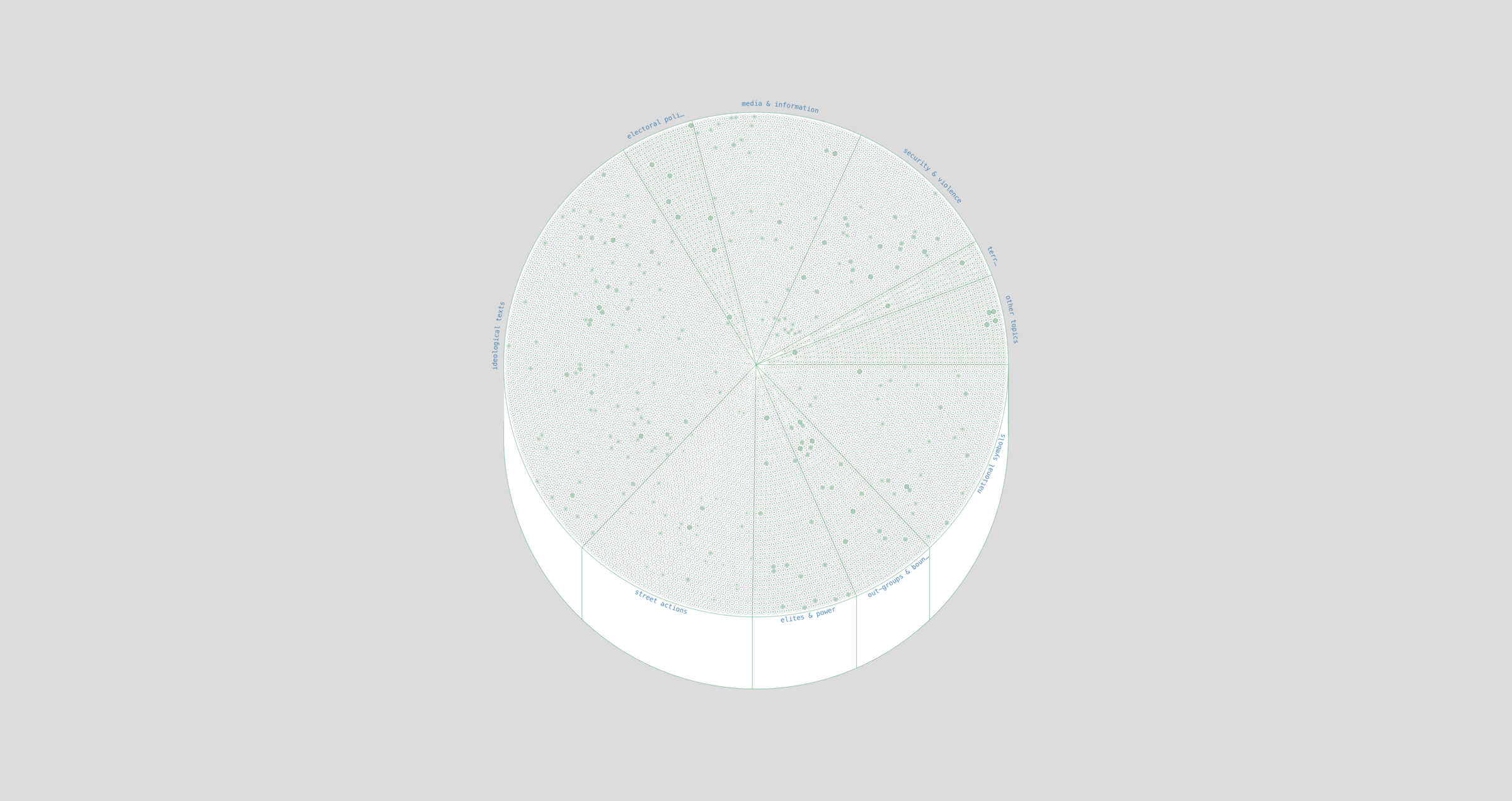
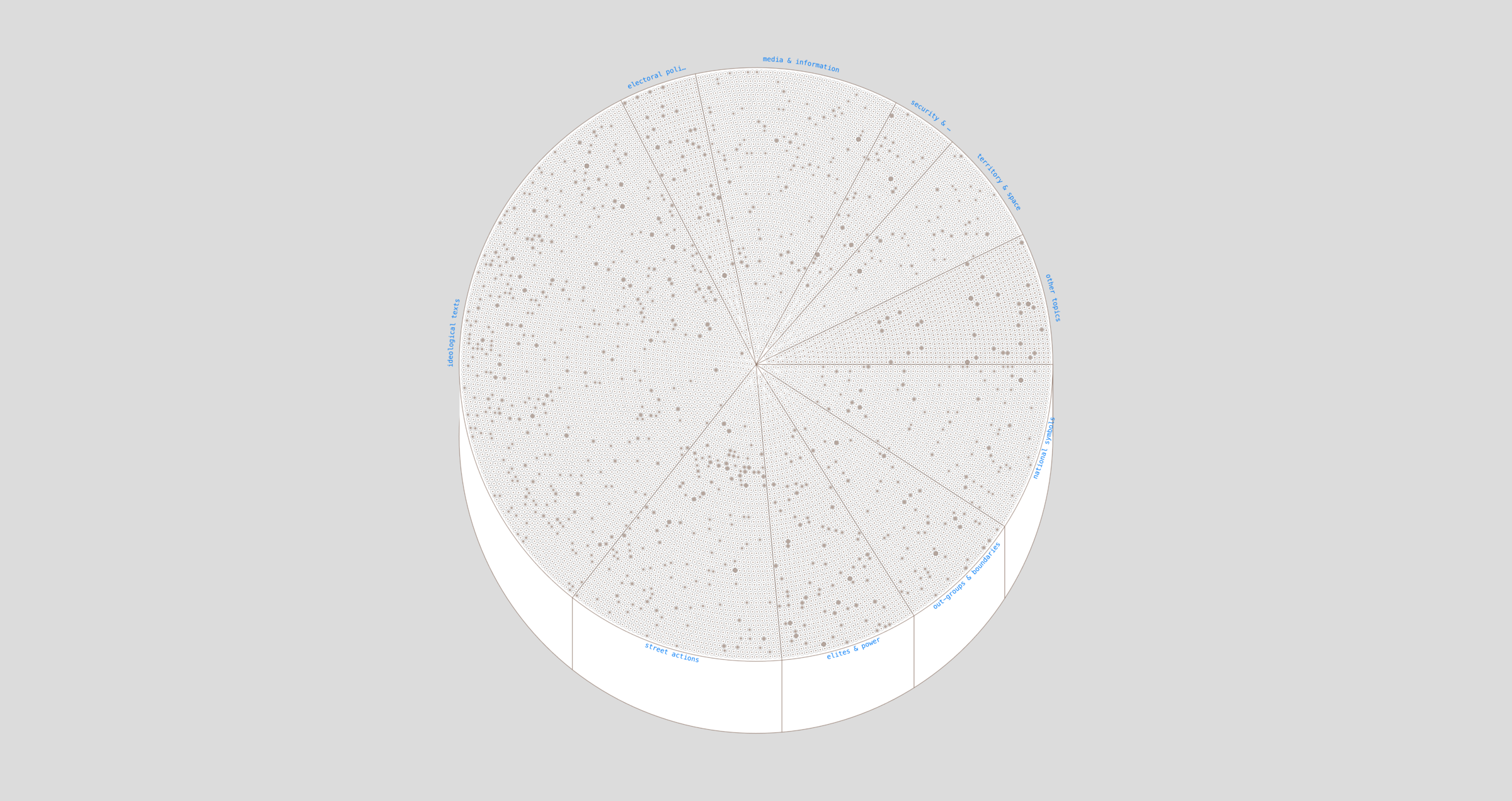
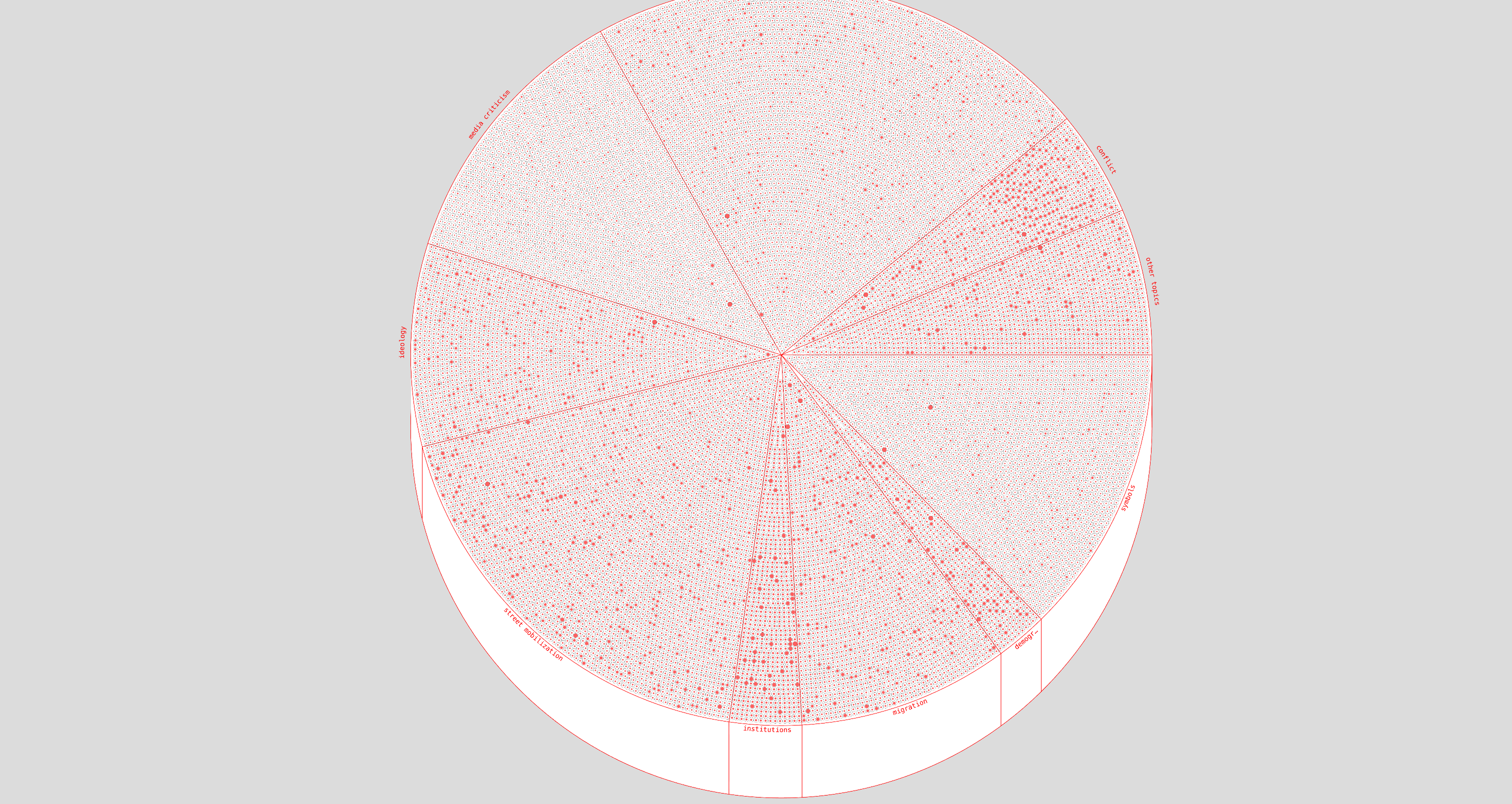
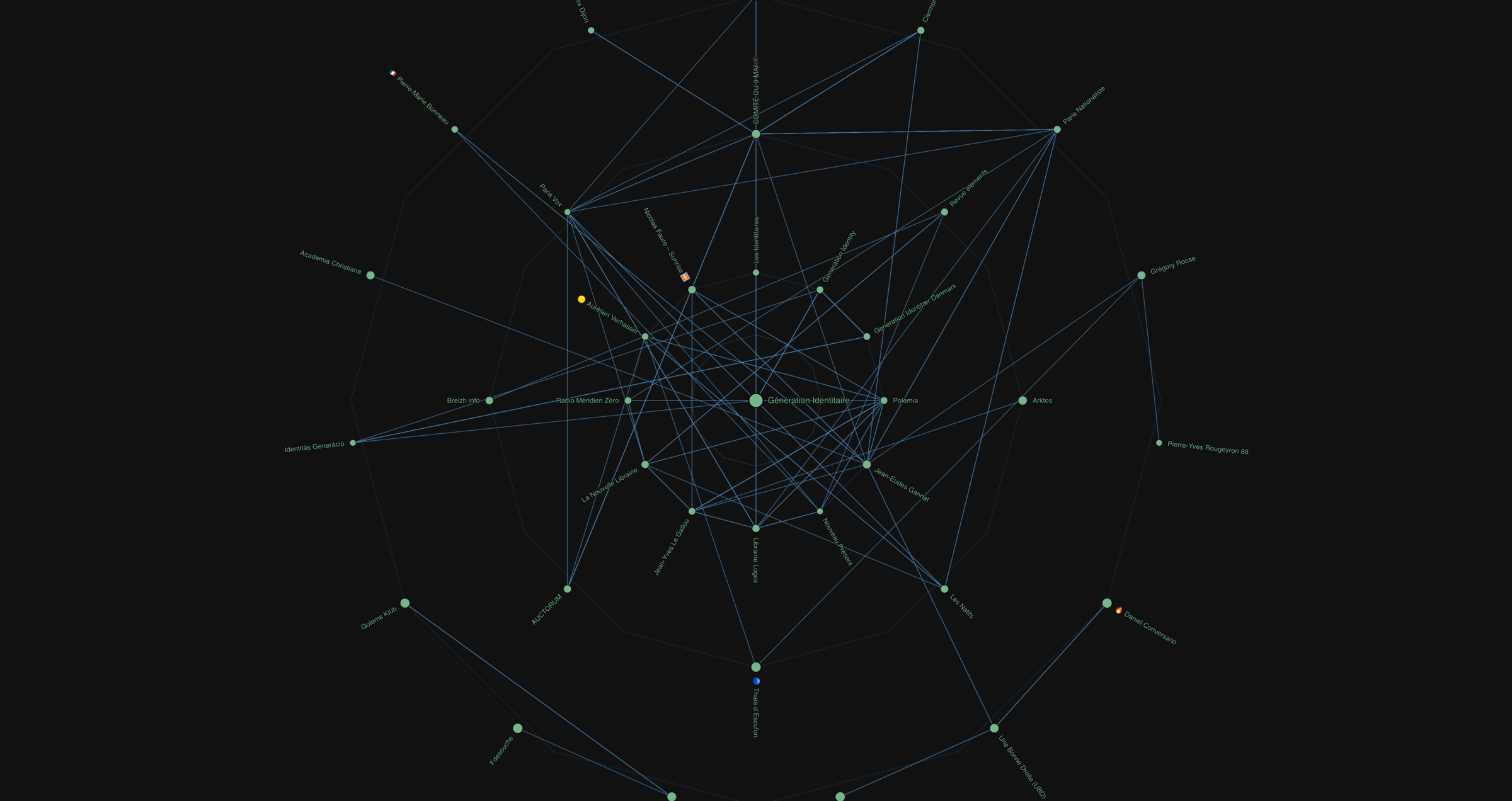
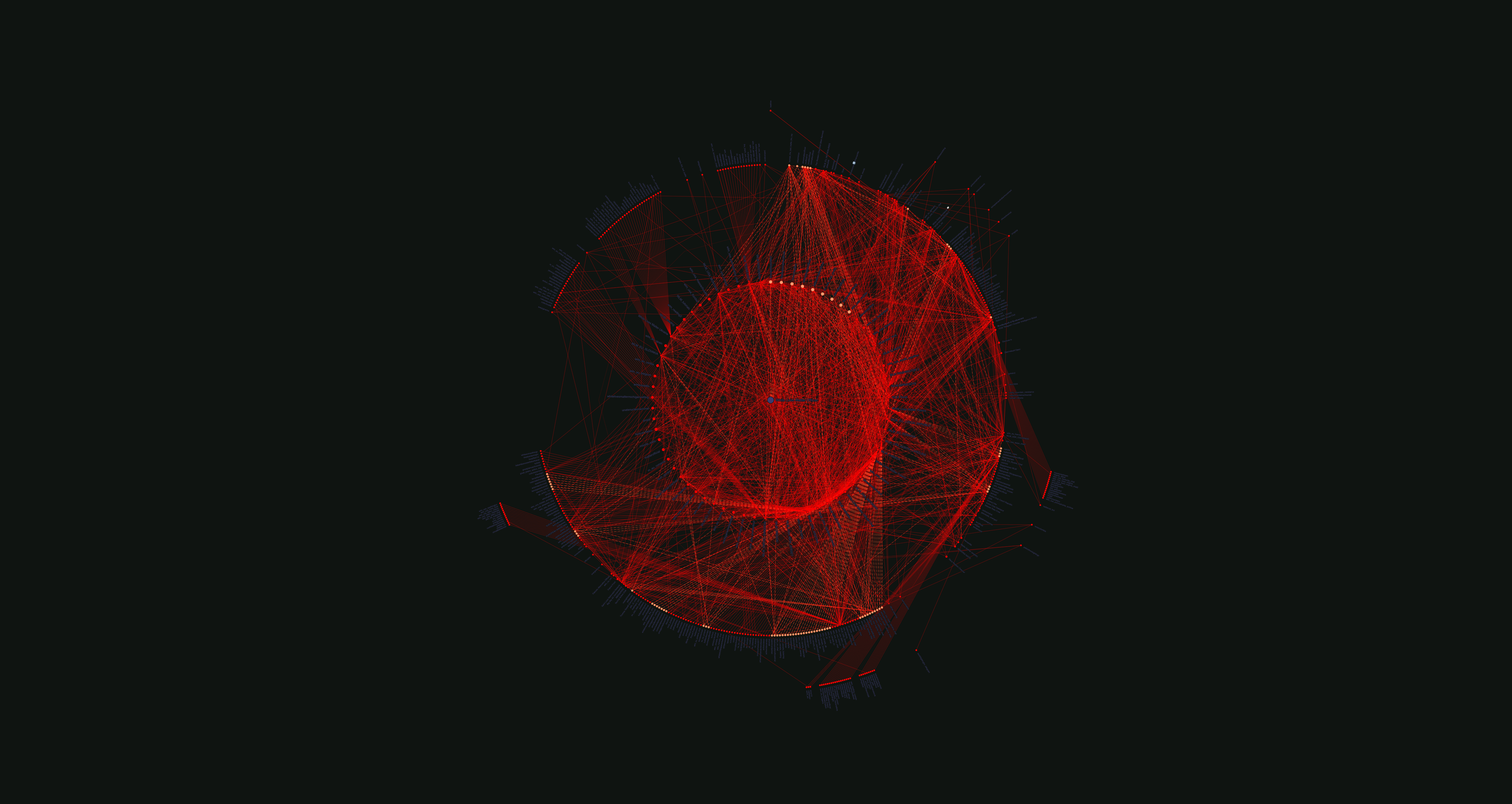
This investigation takes as its input the banner documented at the Berlin protest and follows its network as it becomes visible on Telegram. Messages, mentions, reactions and forwarded posts are collected through automated data scraping and translated into a series of navigable maps, which allows the exploration of these entangled groups and thematic clusters.
This approach reveals how individual groups expand and contract, which channels serve as key hubs, and how various national factions are connected across borders. Although these maps cannot capture the entire movement –due to private groups, deleted links, or blocked content– they expose part of the infrastructure that allows today's far-right ideologies to circulate uncensored. Extremists take advantage of the lack of moderation on Telegram to spread their views with minimal restriction, while making their content and relational structures available for monitoring.
Finally, the investigation extends to a wider selection of Telegram groups from different national contexts, compiled on the basis of activity and connectivity. Particular attention is given to the most shared content among groups, showing how far-right narratives move and adapt across borders.